

Industries
Warehouse and shipping
Software Development
The systems that run behind fulfilment - multi-carrier dispatch, label generation and stock that is actually accurate.
- Fast
- SEO Ready
- Responsive
- Clean Code
- Built for
- 3PL, fulfilment, sellers
- Carriers integrated
- Royal Mail, Evri, DPD, DHL, FedEx, Amazon
- Live example
- UK dispatch platform
- Pricing
- Quoted per project
Built Properly
- Fast
- Reliable
- Secure
- Scalable
This is the work I have done most of
Multi-carrier dispatch, warehouse management and marketplace order import make up the largest part of my commercial experience. Three of the seven projects in my portfolio are in this space, and two of them are live systems handling daily volume.
- Multi-carrier dispatch
- Warehouse management
- The two things that decide whether it works
What I do with it
The systems that run behind fulfilment - multi-carrier dispatch, label generation and stock that is actually accurate.
- One screen covering several carriers, replacing a tab per courier
- Print-ready labels per order, with the carrier's own barcode and service level
- Bulk runs, so a hundred-order picking list is one action rather than a hundred
- Rate comparison before the label is bought
- Address validation up front, because a rejected label costs time even when the money comes back
- Live tracking pulled back and shown against the order, not left in the courier's portal
Tech Stack
- Next.js
- React
- .NET
- SQL Server
- TypeScript
- Tailwind CSS
Using modern and industry-standard tools to deliver future-ready solutions.
Have a project in mind?
Let's discuss your idea and turn it into something that performs.
Get a Free Quote- No obligation
- Free consultation
- Quick response
This is the work I have done most of
Multi-carrier dispatch, warehouse management and marketplace order import make up the largest part of my commercial experience. Three of the seven projects in my portfolio are in this space, and two of them are live systems handling daily volume.
If you are building in this area, you are unlikely to have to explain the domain to me before we can talk about the actual problem.
Multi-carrier dispatch
- One screen covering several carriers, replacing a tab per courier.
- Print-ready labels per order, with the carrier's own barcode and service level.
- Bulk runs, so a hundred-order picking list is one action rather than a hundred.
- Rate comparison before the label is bought.
- Address validation up front, because a rejected label costs time even when the money comes back.
- Live tracking pulled back and shown against the order, not left in the courier's portal.
Warehouse management
- Real-time stock across multiple physical locations rather than one notional total.
- Shelving and bin optimisation - picking routes built around the warehouse's actual layout.
- Full fulfilment workflow: receive, put away, pick, pack, dispatch.
- Goods-in checks against expected quantities, catching short deliveries at the door rather than at the month-end count.
- Stock movement history, so a discrepancy traces back to the action that caused it.
The two things that decide whether it works
First, failure handling around carrier APIs. They disagree about address formats, service codes, what counts as an error and how often they are available. A carrier being down at four in the afternoon cannot stop the rest of the day's dispatch, and a rejected label has to name the field the carrier objected to so a packer can fix it without phoning anyone.
Second, stock has to be modelled as movements rather than as a number you overwrite. Two people picking the same shelf at once will otherwise quietly clobber each other, and by the time the count disagrees nobody can reconstruct why.
And a third that is really a design principle: in a warehouse the software is not the job, picking is. Anything that adds a step to a packer's routine gets worked around within a week, and then the figures drift. The fast path has to be the accurate one.
Example projects
Real projects. Real results.
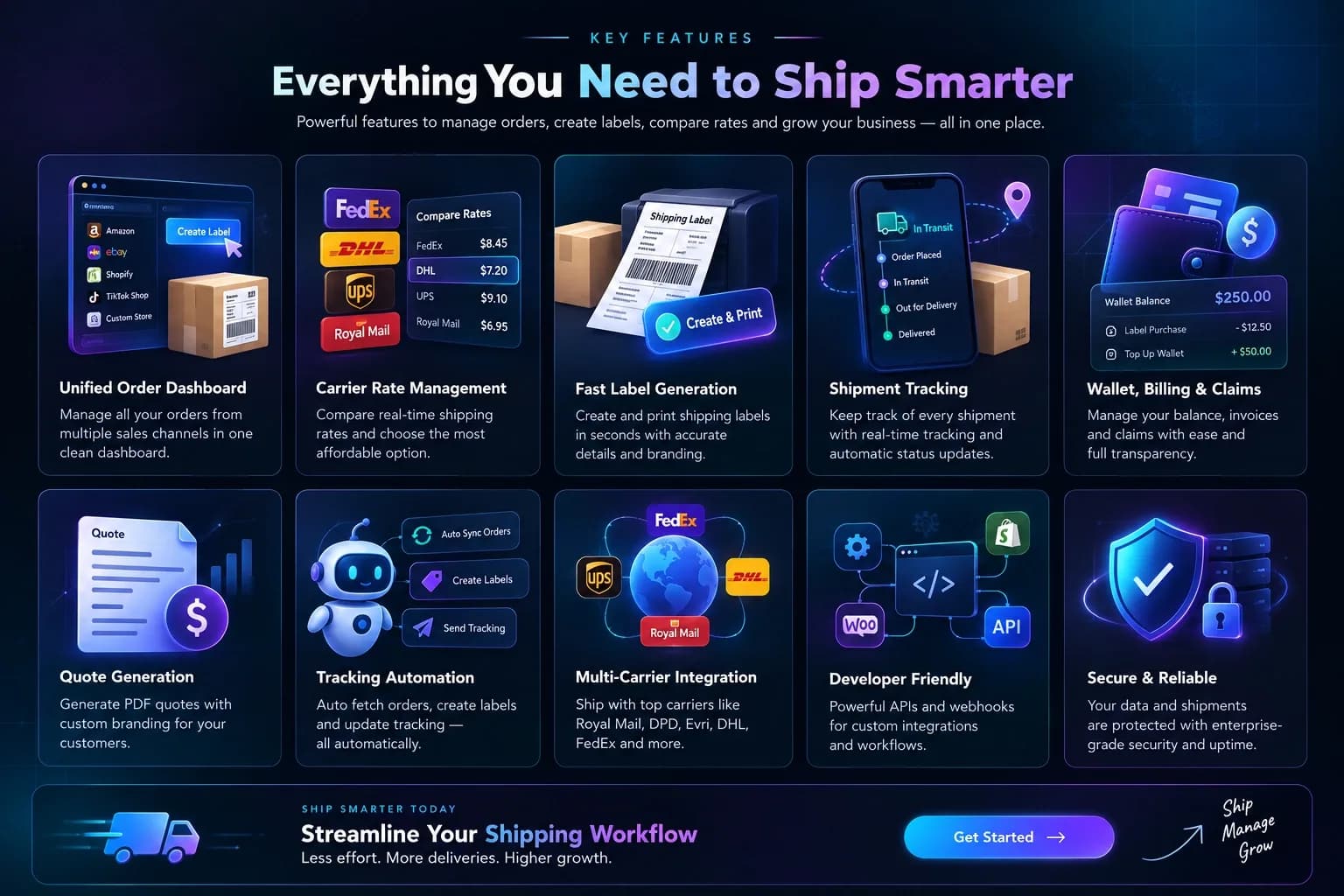 ProjectUK Multi-Carrier Dispatch PlatformLive UK dispatch platform - Royal Mail, Amazon, Evri and One World from one screen, with bulk labels and live tracking.ASP.NET Core 9.0Entity Framework CoreSQL Server
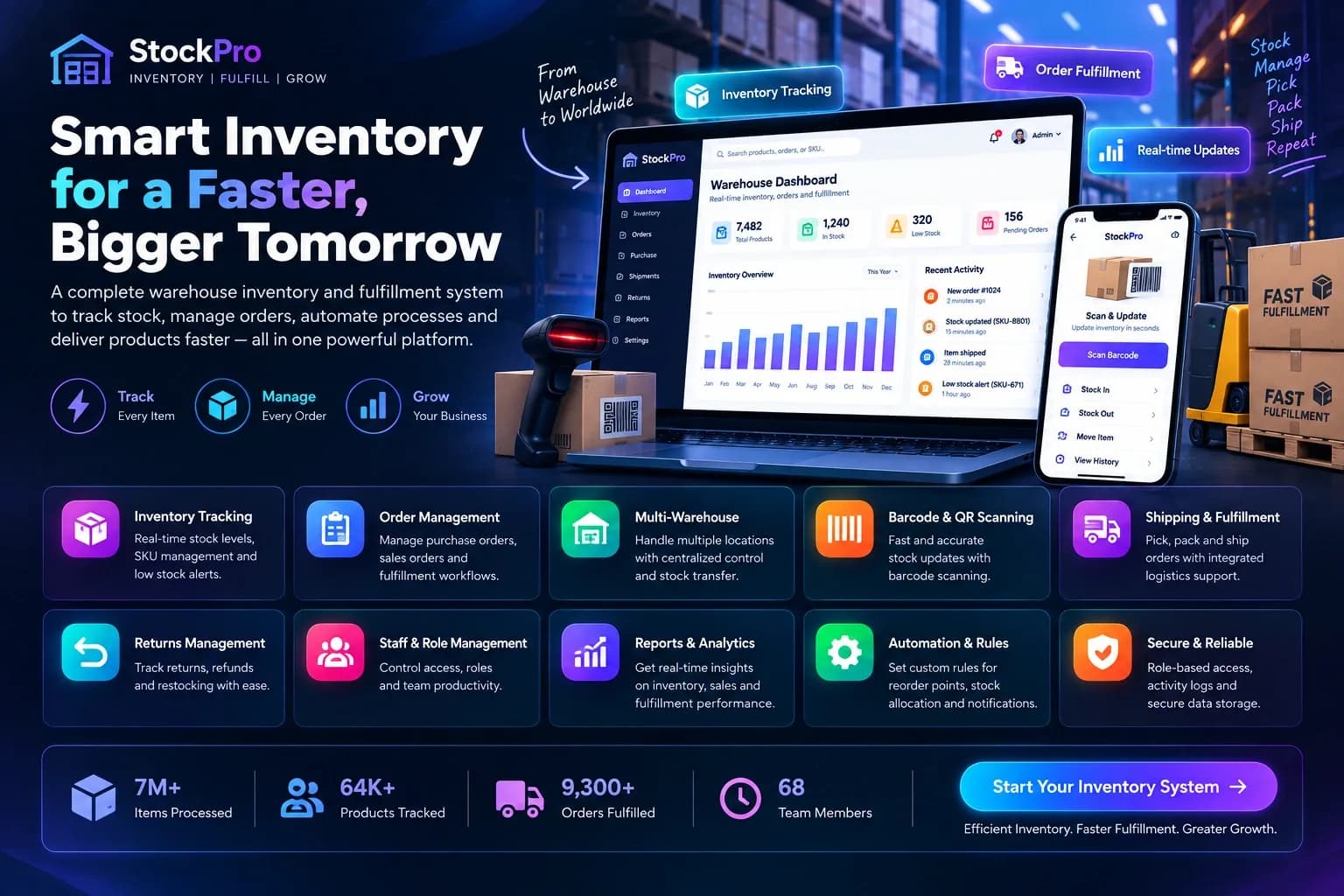 ProjectWarehouse Inventory and Fulfilment System10,000+ SKUs across multiple locations, picking time cut by 35 percent, 500+ shipments a day.ASP.NET Core 9C#Entity Framework Core
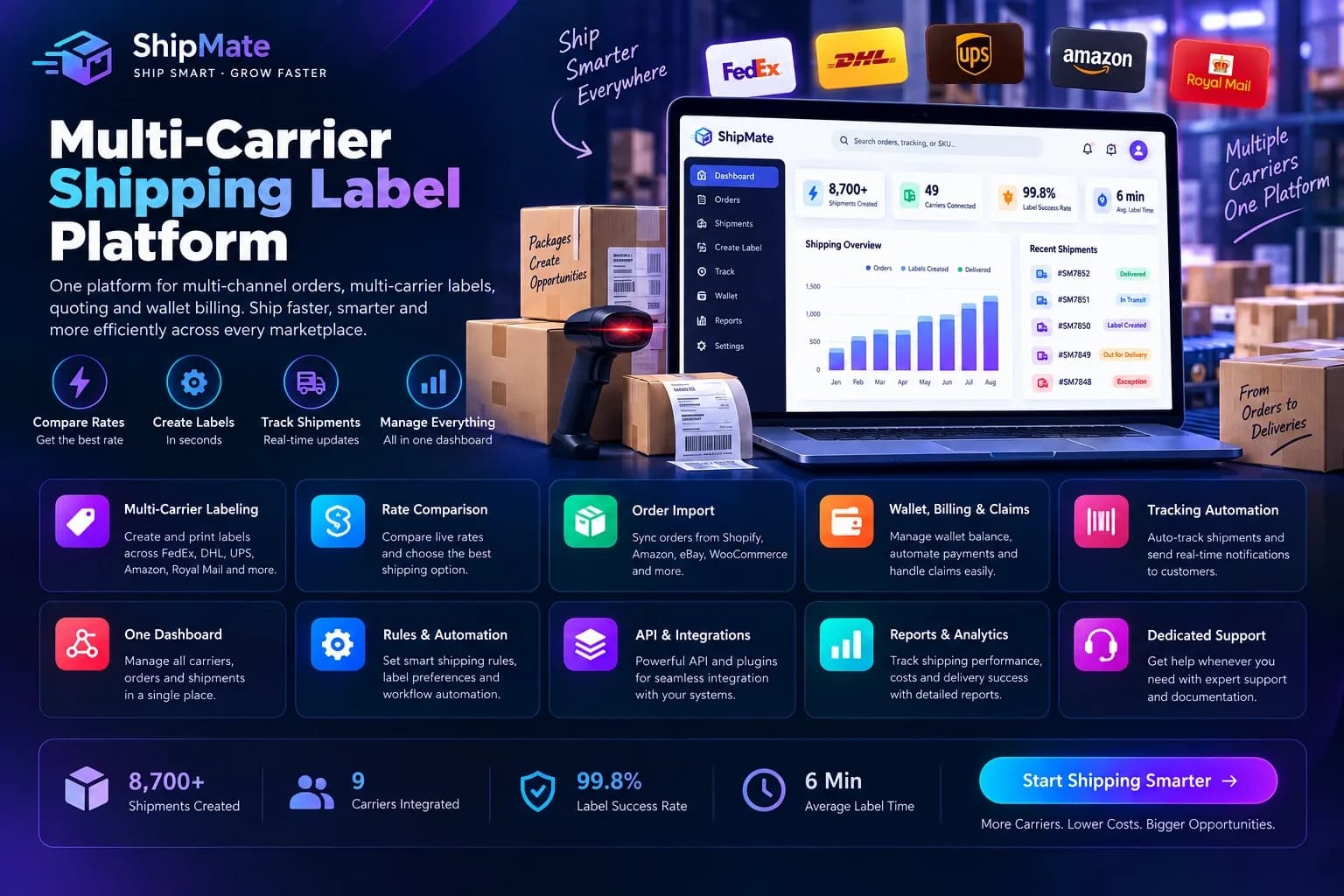 ProjectMulti-Carrier Shipping Label PlatformRoyal Mail, DPD, Evri, DHL and FedEx with a postage wallet and eBay, Shopify, Amazon and TikTok Shop import.ASP.NET CoreC#SQL Server
 GuideASP.NET Core Web API Performance: From 900ms to 3ms on Cheap HostingEF Core projections, tagged output caching and batched writes - the seven changes that made a real Web API fast on a slow database link.Programming7 min read
Frequently Asked Questions
Quick answers to common questions about logistics & shipping.
Which carriers can you integrate?+
I have shipped integrations with Royal Mail, Evri, DPD, DHL, FedEx, Amazon Shipping and One World. Any carrier with a documented API can be added - each sits behind a common interface, so a new one is an addition rather than a rewrite.
Can it import orders from marketplaces?+
Yes - eBay, Shopify, Amazon and TikTok Shop have all been done. Imports run on a schedule with idempotent keys, so a retry after a timeout cannot import the same order twice.
We already have a WMS. Can you integrate with it?+
Usually, if it has an API or a database you can reach. Tell me what you are running and I will say honestly whether integrating or replacing is the better spend - replacing a working WMS is rarely the right answer.
How long does a system like this take?+
The UK dispatch platform was about three months. A narrower piece - say label generation for two carriers - is considerably less. Scope drives it far more than the technology does.
Ready to get started?
Let's create something amazing together.
- Free Consultation
- Custom Solution
- On-Time Delivery