

Web Development
Next.js and
React Development
Front ends that are fast on a mid-range phone and legible to search engines, built on Next.js, React and TypeScript.
- Fast Performance
- SEO Optimized
- Responsive Design
- Clean & Scalable Code
- Typical stack
- Next.js, React, TypeScript, Tailwind
- Rendering
- SSR, SSG and ISR as the content allows
- Pairs with
- ASP.NET Core, or any REST API
- Pricing
- Quoted per project
Build Modern Websites
- Fast
- SEO Friendly
- Responsive
- Scalable
Why Next.js instead of a plain React app?
A plain React app ships an empty page and fills it in with JavaScript once it loads. Next.js solves this with server-side rendering, static generation and modern features, giving you better performance, SEO and real business results.
- Better SEO and search visibility
- Faster initial load with SSR/SSG
- Built-in routing, API routes and more
- Image optimization and automatic code splitting
- Scalable for blogs, business websites and complex web apps
What I do with it
I build high-performance web applications for businesses, startups and individuals.
- Business websites and marketing sites
- Frontend over existing APIs (.NET, Node, etc.)
- Full-stack Next.js applications
- Rebuild old or slow sites with modern tech
- Dynamic content, blog, CMS integration
- Custom components and UI/UX implementation
Tech Stack
- Next.js
- React
- TypeScript
- Tailwind CSS
- Shadcn UI
- Vercel
Using modern and industry-standard tools to deliver future-ready solutions.
Have a project in mind?
Let's discuss your idea and turn it into a high-performing Next.js website.
Get a Free Quote- No obligation
- Free consultation
- Quick response
Why Next.js rather than a plain React app
A plain React app ships an empty page and fills it in with JavaScript once it loads. That is fine for a dashboard behind a login. It is a poor choice for anything that needs to be found, because the first thing a crawler or a slow phone sees is nothing.
Next.js renders on the server, so the page arrives as HTML with the content already in it. You keep React for the parts that genuinely need to be interactive, and stop paying for it on the parts that do not.
What I do with it
- Marketing sites and content sites where search visibility is the point.
- Front ends over an existing API - .NET, Node, or whatever you already run.
- Full-stack Next.js applications where a separate backend would be overkill.
- Rebuilds of slow sites, where the framework change is the smaller half of the work.
- Dynamic Open Graph images, sitemaps, RSS and structured data - the plumbing that makes content actually circulate.
Speed and search are the same conversation
Core Web Vitals are a ranking input, and they are also just what a visitor experiences. I build against them from the start rather than measuring at the end and then arguing with the numbers.
In practice that means images served in modern formats at the size the layout actually uses, fonts that do not block the first paint, as little JavaScript shipped to the browser as the design allows, and pages statically generated wherever the content permits it.
This site is the reference implementation. It runs on Next.js against an ASP.NET Core API, and everything described here is doing its job on the page you are reading.
Accessibility is built in, not retrofitted
Real headings, labelled form fields, visible focus states and sensible contrast are cheaper to do while building than to add under a deadline later. For anything selling into the EU or UK this is now a legal question as well as a quality one.
Example projects
Real projects. Real results.
 Project3 Senses Clinics - Multispecialty Clinic WebsitePer-specialty pages, appointment booking and WhatsApp consultation, built mobile-first against Core Web Vitals.Next.jsReactTypeScript
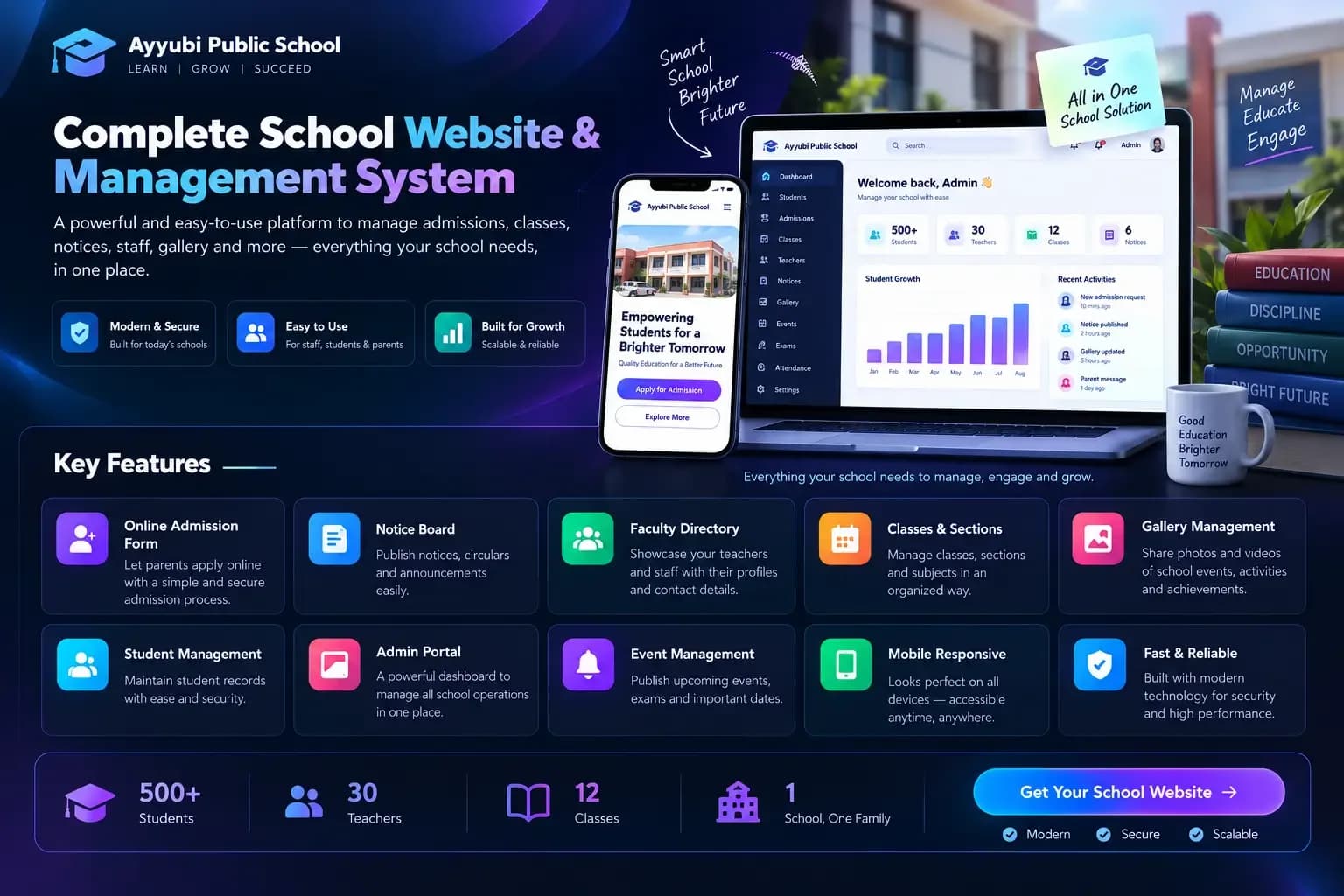 ProjectAyyubi Public School - Website & School Management SystemA Next.js front end over a JWT-secured ASP.NET Core API.ASP.NET CoreNext.jsReact
 GuideWordPress Ya Custom Website - Aapke Business Ke Liye Kya Sahi Hai?WordPress ya custom-coded website - dono me kya farak hai, kiska kharcha kitna aata hai, aur aapke business ke liye kaunsa sahi rahega. Seedha comparison.Web Development3 min read
 GuideThe European Accessibility Act: What Your Website Actually Has to ChangeIn force since June 2025, with fines attached. Who is exempt, the eight things that fail most often, and how to check your own site in an hour.Web Development6 min read
Frequently Asked Questions
Quick answers to common questions about next.js development.
Is Next.js better than WordPress for my business?+
Not always. If you need to publish content daily and change page layouts yourself without calling a developer, WordPress is often the right answer and I will say so. Next.js wins when speed matters, when the site has real functionality, or when you are tired of a plugin stack that breaks every time something updates. I have written a full comparison rather than a sales pitch - it is linked on this page.
Can you build the front end if my backend already exists?+
Yes, and it is common. As long as there is an API - .NET, Node, PHP, anything that returns JSON - the front end can sit on top of it without your existing system being rewritten.
Will I be able to edit the content myself?+
Yes, if you want that. It can be wired to a CMS or to a simple admin panel, which is how this site works - the blog, portfolio and settings are all editable without touching code. That is a choice made per project, so tell me who will be updating the site and how often.
How fast will the site be?+
Fast enough that speed stops being a topic. I build against Core Web Vitals rather than promising a specific score on hardware I have not seen, but a well-built Next.js site on decent hosting is typically several times quicker than the template-and-plugin site it replaces.
Ready to get started?
Let's create something amazing together.
- Free Consultation
- Custom Solution
- On-Time Delivery