

Performance
Website speed
Optimisation
Finding out why your site is slow, telling you plainly, and then fixing it - usually in the database rather than the design.
- Core Web Vitals
- Database Tuning
- Caching
- Clear Report

- Starts with
- A prioritised audit
- Covers
- Frontend, backend and database
- Deliverable
- Report you keep, fixes optional
- Pricing
- Audit from ₹6,000
Make It Fast
- LCP
- CLS
- INP
- Queries
Why is my website slow?
Slow sites are rarely slow because the code is slow. They are slow because the same work is done over and over - the same query on every page, images scaled in the browser, scripts nobody needs. That is the cheap kind of slowness to fix.
- Core Web Vitals measured on real pages
- Database queries and missing indexes fixed
- Caching where it actually helps
- Images and fonts served the right way
- A clear report you keep, fixes optional
What I do with it
I find out why your site is slow, tell you plainly and then fix it.
- Core Web Vitals audit (LCP, CLS, INP)
- Database and query optimisation
- Caching and CDN setup
- Image and font optimisation
- JavaScript and bundle trimming
- Hosting and server configuration
Tech Stack
- Lighthouse
- SQL Server
- .NET
- Next.js
- Vercel
- Azure
Using modern and industry-standard tools to deliver future-ready solutions.
Have a project in mind?
Share your site and get a clear picture of what is slowing it down.
Get a Free Quote- No obligation
- Free consultation
- Quick response
The usual diagnosis
Slow sites are rarely slow because the code is slow. They are slow because the same work is being done over and over - the same query on every page load, the same list fetched to count it, a full-resolution image scaled down in the browser instead of on the server.
That is good news, because repeated work is the cheap kind of slowness to fix. It is also why speed work is worth buying as a standalone piece rather than as a reason to rebuild everything.
What gets looked at
- Core Web Vitals - LCP, CLS and INP - measured on a real page rather than a lab score you cannot act on.
- Database queries: the N+1 patterns, the missing index, the query that loads every row to display ten.
- Caching, and whether anything is cached at all. This is the single biggest win on most .NET and WordPress sites.
- Images - format, dimensions, and whether the browser is being handed a 4000px photo for a 400px slot.
- JavaScript weight, and how much of it runs before the page becomes usable.
- Hosting and server configuration, including whether you are paying for a plan that is throttling you.
What you get
A prioritised report: what is slow, why, how much each fix is worth, and roughly what each costs. Ordered by return, not by how easy it is for me.
It is written to be readable by whoever signs off the budget, not only by a developer - and you keep it whether or not I do the work. If the fixes are simple enough for your existing developer to apply, that is a perfectly good outcome.
An honest note on what speed buys you
Speed is a ranking input, but a small one next to relevance. Making a page faster will not rank it for something it does not answer.
What speed reliably does is stop you losing the traffic you already earned. The measurable effect usually shows up in bounce rate and conversions before it shows up in rankings, and that is the honest case for doing it.
Example projects
Real projects. Real results.
 ProjectUK Multi-Carrier Dispatch PlatformBuilt around bulk operations and external API latency from the start rather than tuned afterwards.ASP.NET Core 9.0Entity Framework CoreSQL Server
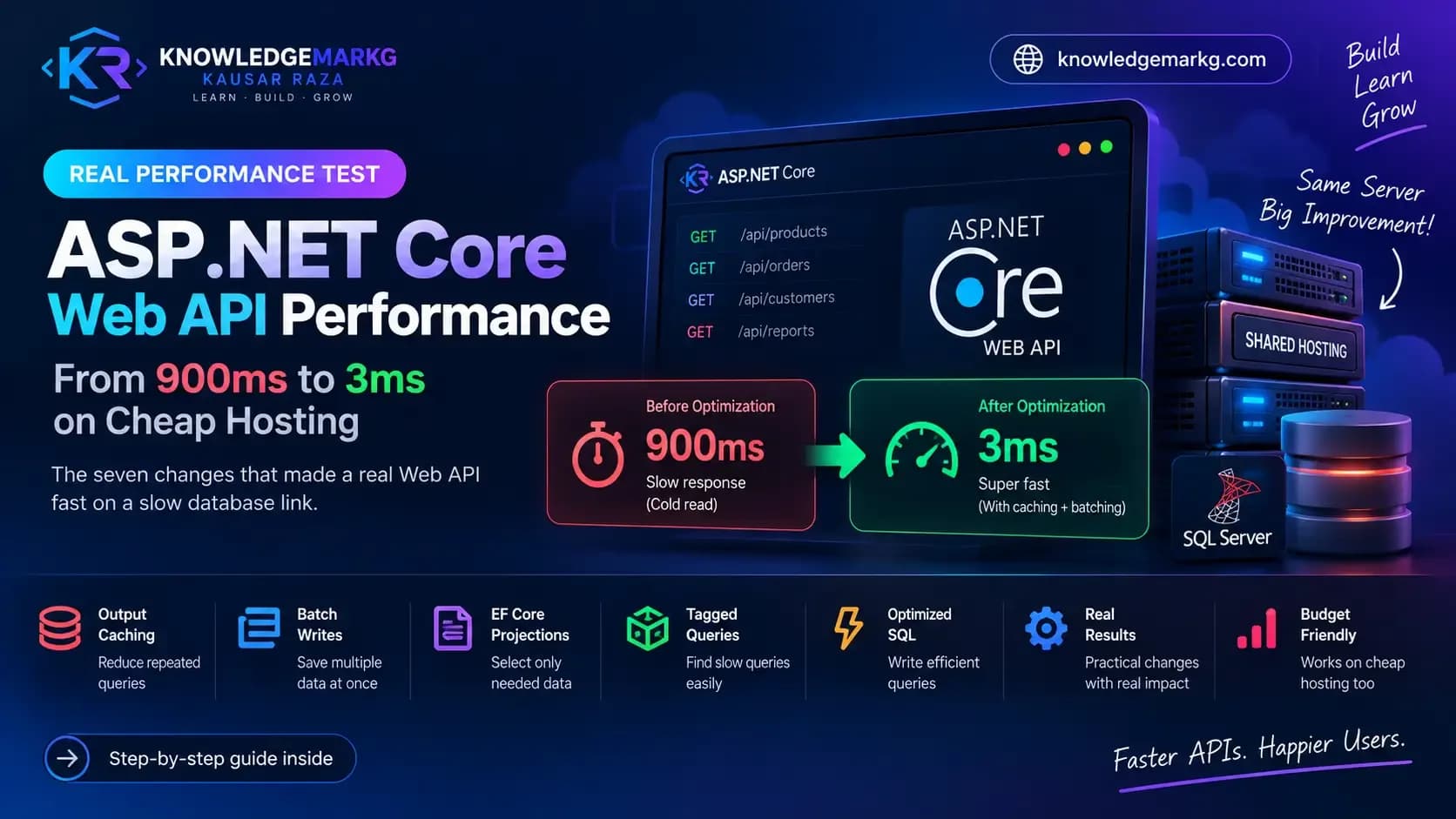 GuideASP.NET Core Web API Performance: From 900ms to 3ms on Cheap HostingEF Core projections, tagged output caching and batched writes - the seven changes that made a real Web API fast on a slow database link.Programming7 min read
 GuideWindows VPS vs Linux VPS for ASP.NET Core: Which Do You Actually Need? (2026)ASP.NET Core runs on Linux, and so does SQL Server. Here is how to tell which .NET you are on, and how much RAM and storage each option really needs.Technology8 min read
Frequently Asked Questions
Quick answers to common questions about website speed optimisation.
How much faster will my site get?+
I will not put a number on it before looking - anyone who does is guessing. What I can say is that the audit tells you the expected gain per fix before you commit to any of them, so you decide with the numbers in front of you.
Do I have to rebuild the site?+
Usually not. Most of the gain comes from caching, queries and images, none of which need a rebuild. A rebuild only makes sense when the platform itself is the problem, and that is a conclusion the audit reaches with evidence rather than an assumption it starts from.
Does this work on WordPress?+
Yes. The diagnosis is the same everywhere - repeated work, uncached queries, oversized images - and WordPress sites tend to have all three, usually contributed by plugins rather than by the theme.
Can you fix it, or just tell me what is wrong?+
Either. The audit stands on its own and you keep it. If you want the fixes applied I will quote them from the report, itemised, so you can take some and leave others.
Ready to get started?
Let's create something amazing together.
- Free Consultation
- Custom Solution
- On-Time Delivery