
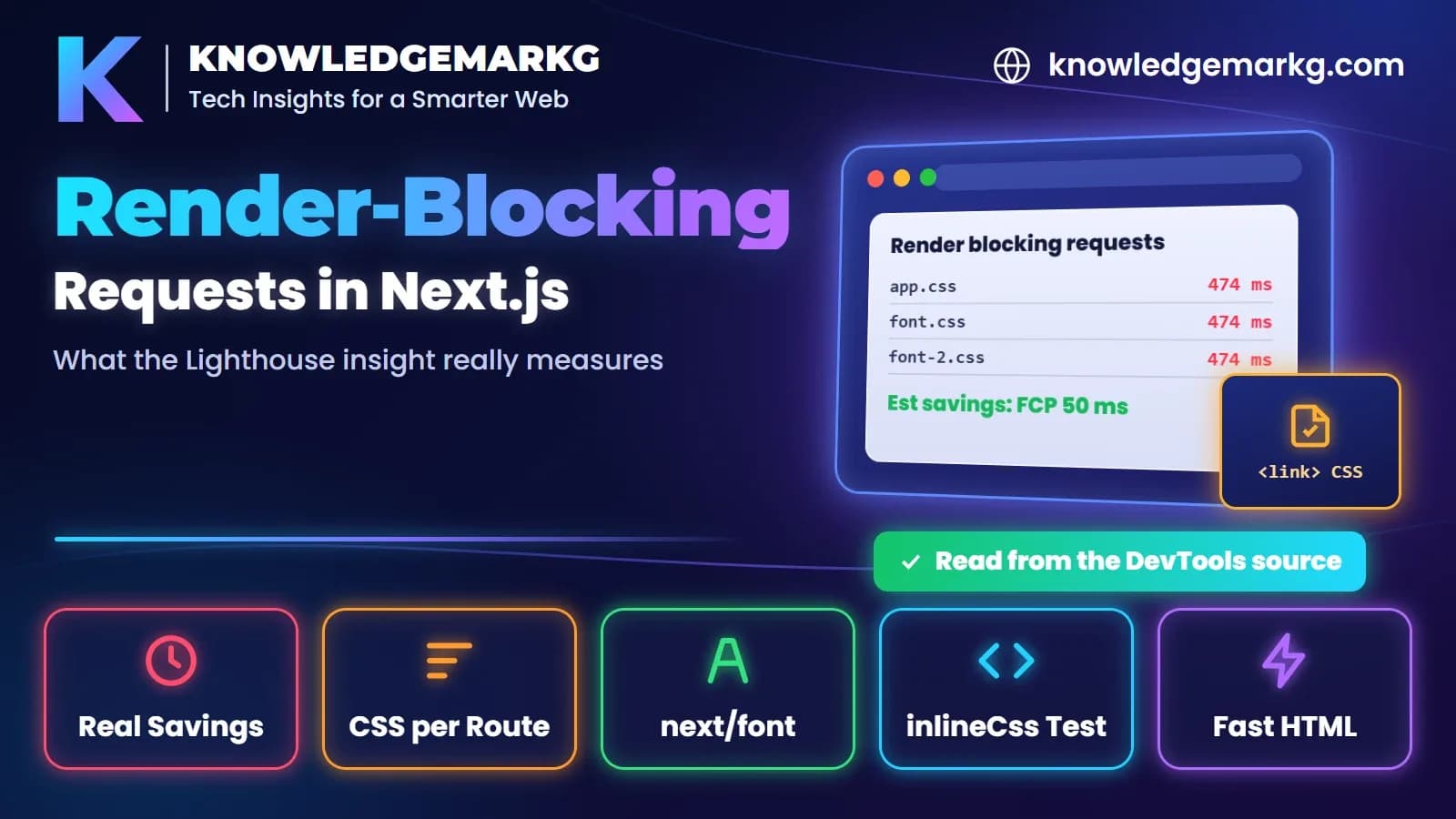
Render-Blocking Requests in Next.js: What the Insight Measures
Lighthouse said 474 ms per stylesheet and 50 ms of savings. What the render-blocking insight really measures, read from its source, and the Next.js fixes that held up on a live site.
Tag
12 articles

Lighthouse said 474 ms per stylesheet and 50 ms of savings. What the render-blocking insight really measures, read from its source, and the Next.js fixes that held up on a live site.

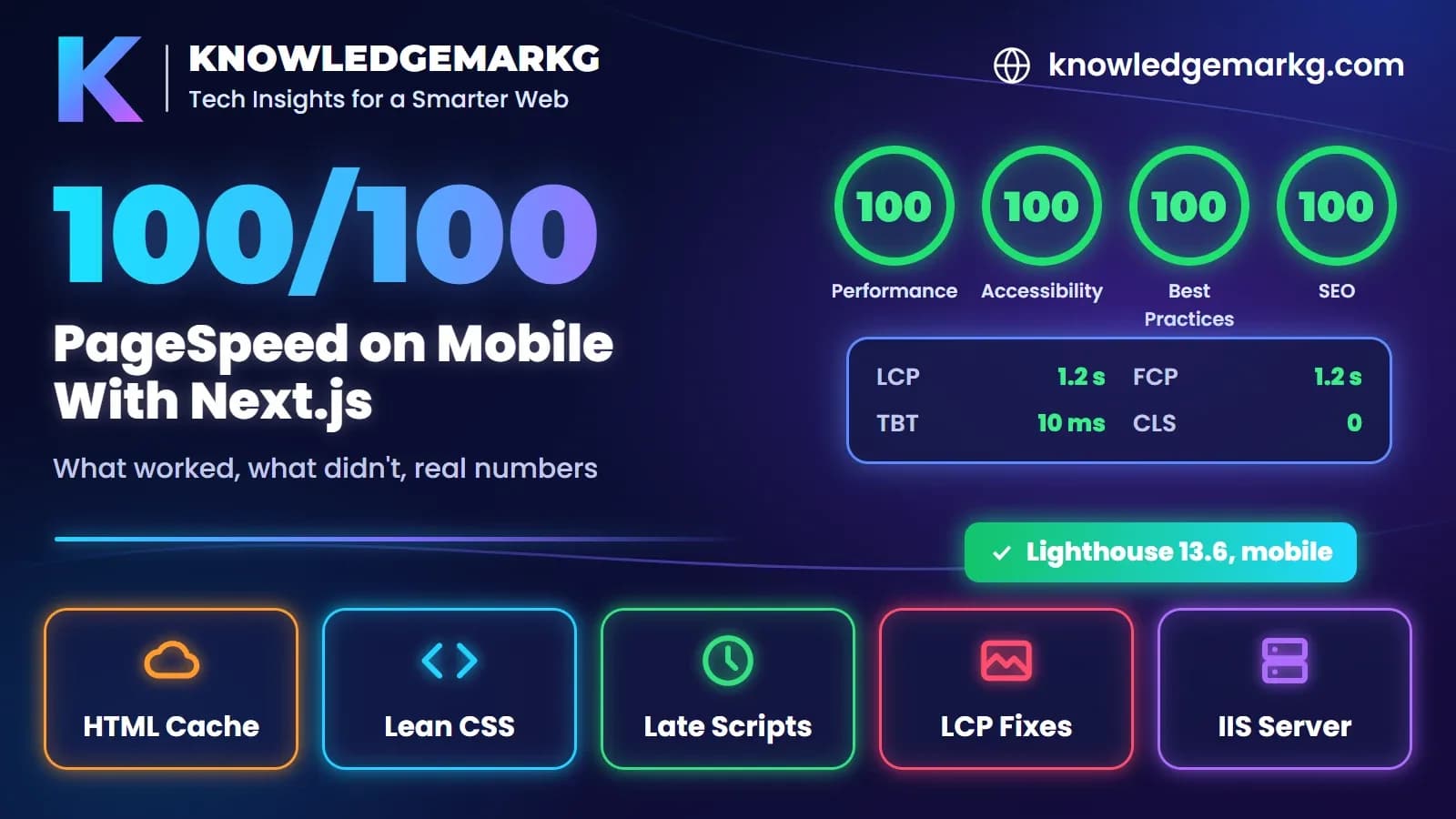
A Next.js site on Windows IIS went from the low 80s to PageSpeed 100 on mobile. The Cloudflare rules, the code changes, the real numbers, and the fixes that did nothing.

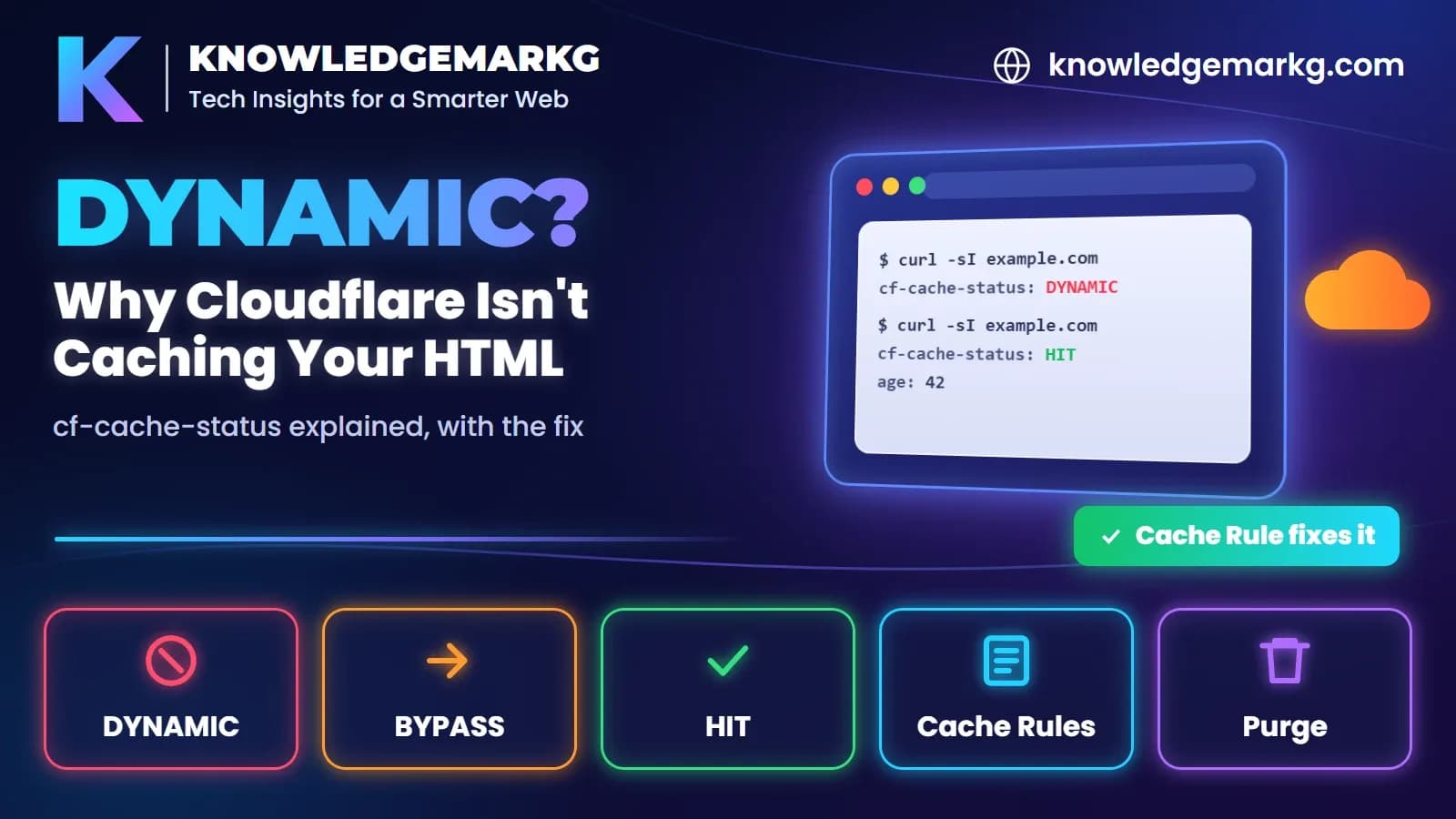
cf-cache-status DYNAMIC means Cloudflare never tried to cache the page. What each status means, with real headers, DYNAMIC vs BYPASS, and the Cache Rule fix.

Cloudflare caches 404 responses. A new post on this site returned 404 for ten minutes after it went live because the 404 had been cached first. The headers, why stale-while-revalidate kept it, and three fixes.

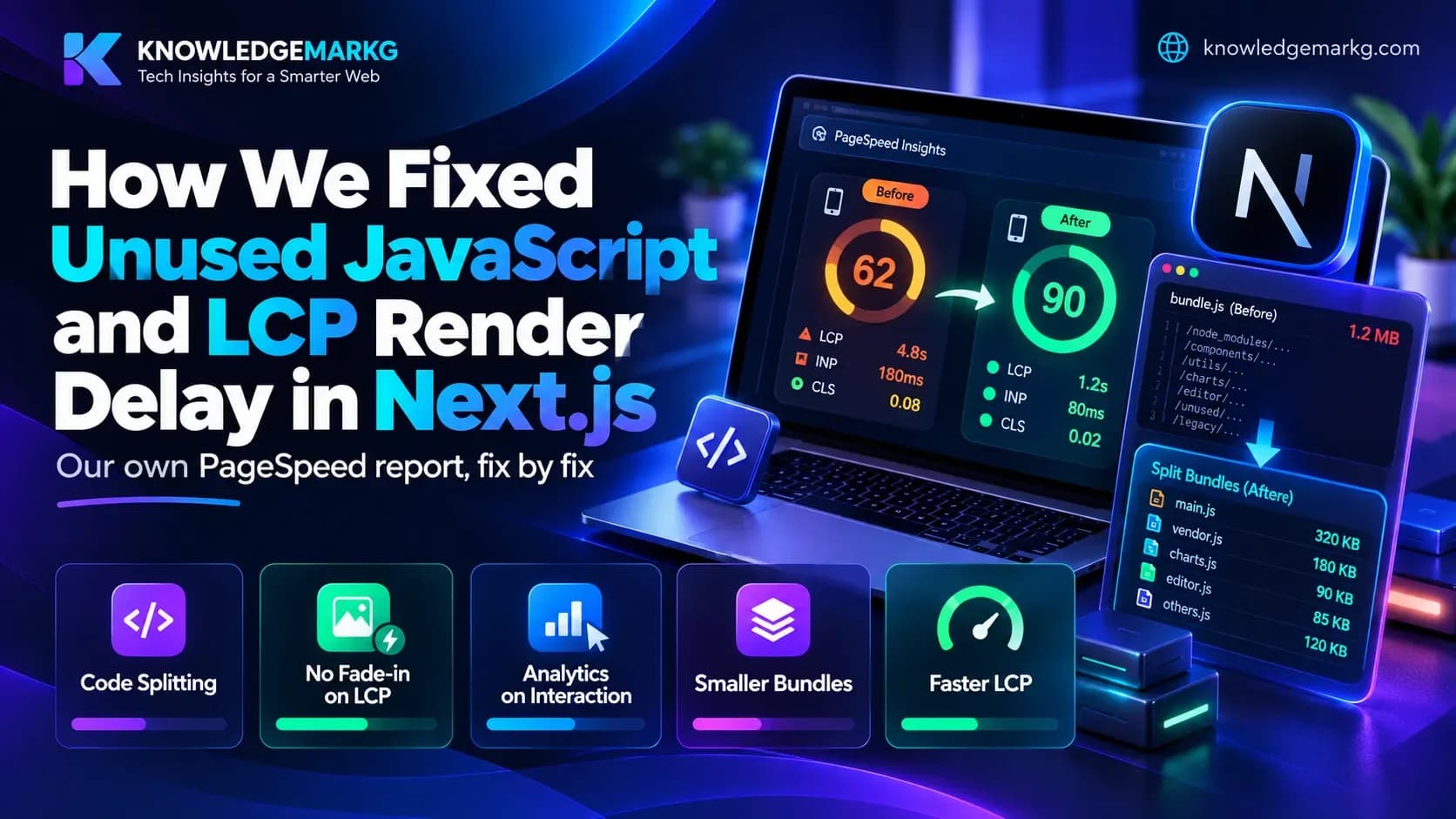
Each issue in our own PageSpeed report and exactly what we changed - code splitting, the fade-in that hid our headline, analytics on interaction, two fixes that backfired - plus e-commerce speed and security headers.

Our own benchmark of gzip, Brotli and zstd (body size, requests per second, CPU), and the Cloudflare settings this site runs: what is on, what is off, and what a shop must never cache.

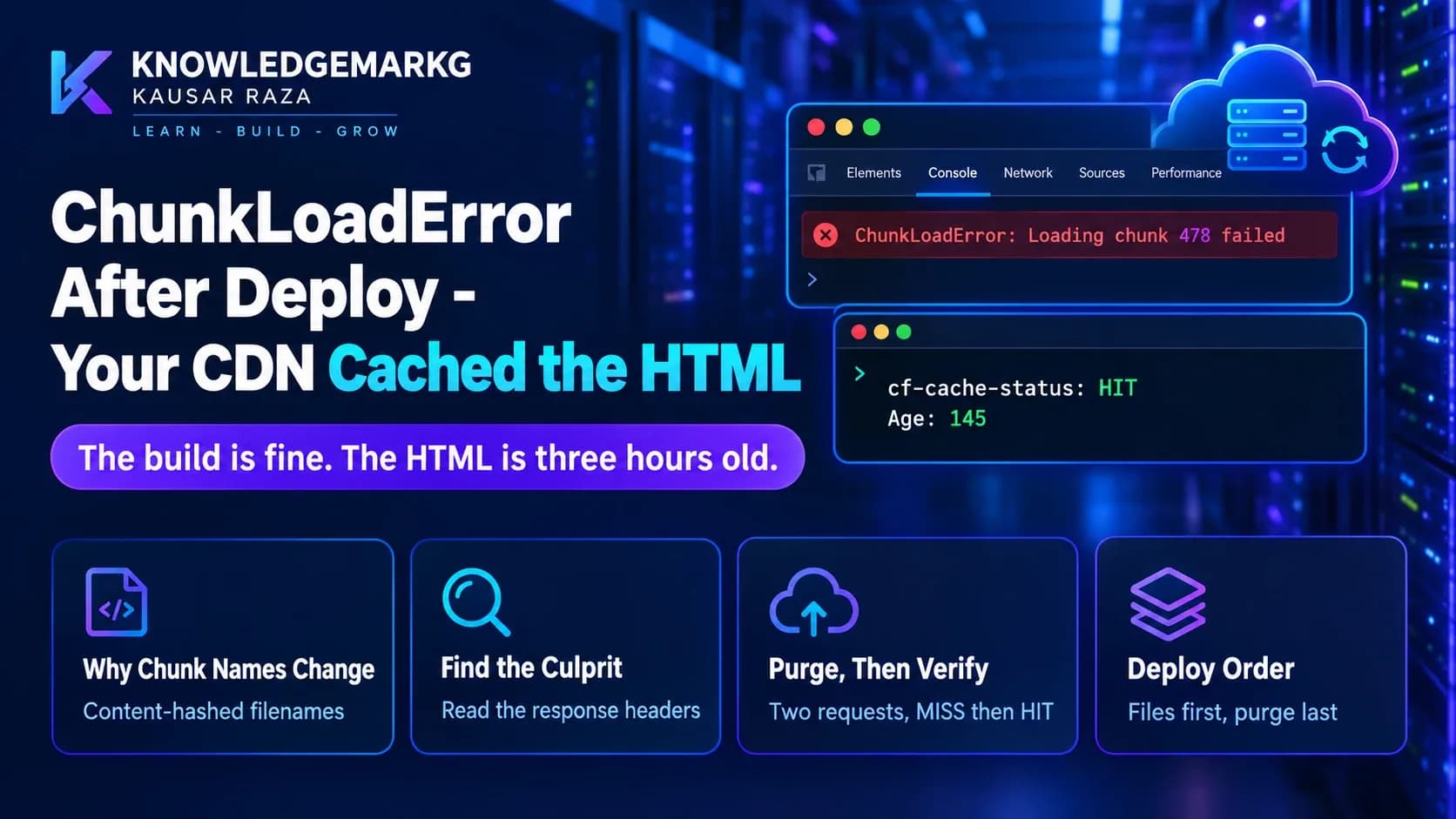
The page loads with no styling and the console says ChunkLoadError. The build is fine and the files are on the server. The HTML asking for them is three hours old and came from your CDN, and it is still naming the chunks from the previous build.

You deployed, the database says the change is there, and the live page still shows the old content. Before you start debugging, send one request and read a single header. It will tell you which of two completely different problems you have.

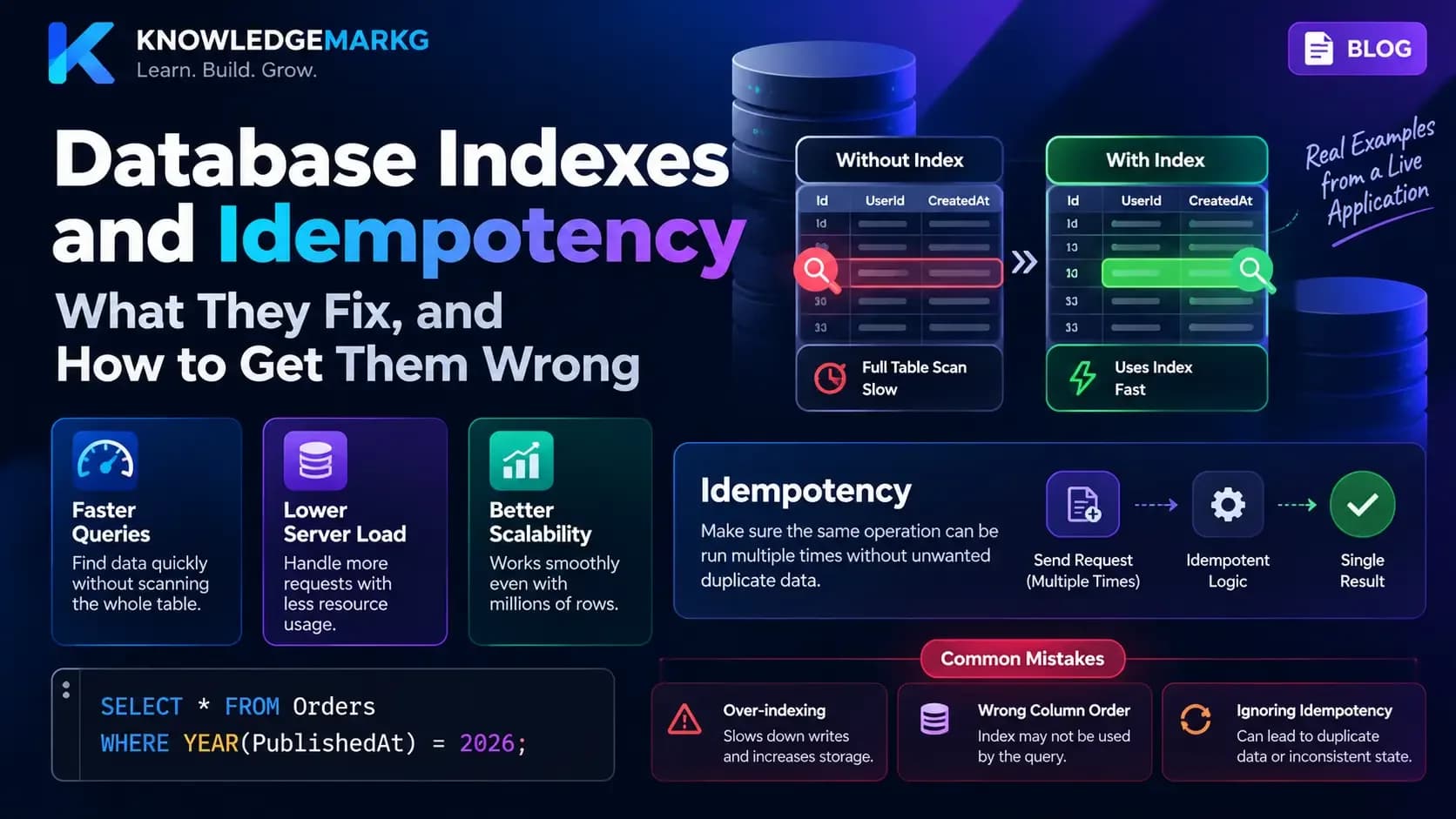
An index is how reads survive scale; idempotency is how writes survive retries. What each one fixes, why composite column order decides everything, why an idempotency key needs a UNIQUE constraint, and the migration-history failure where both ideas meet.

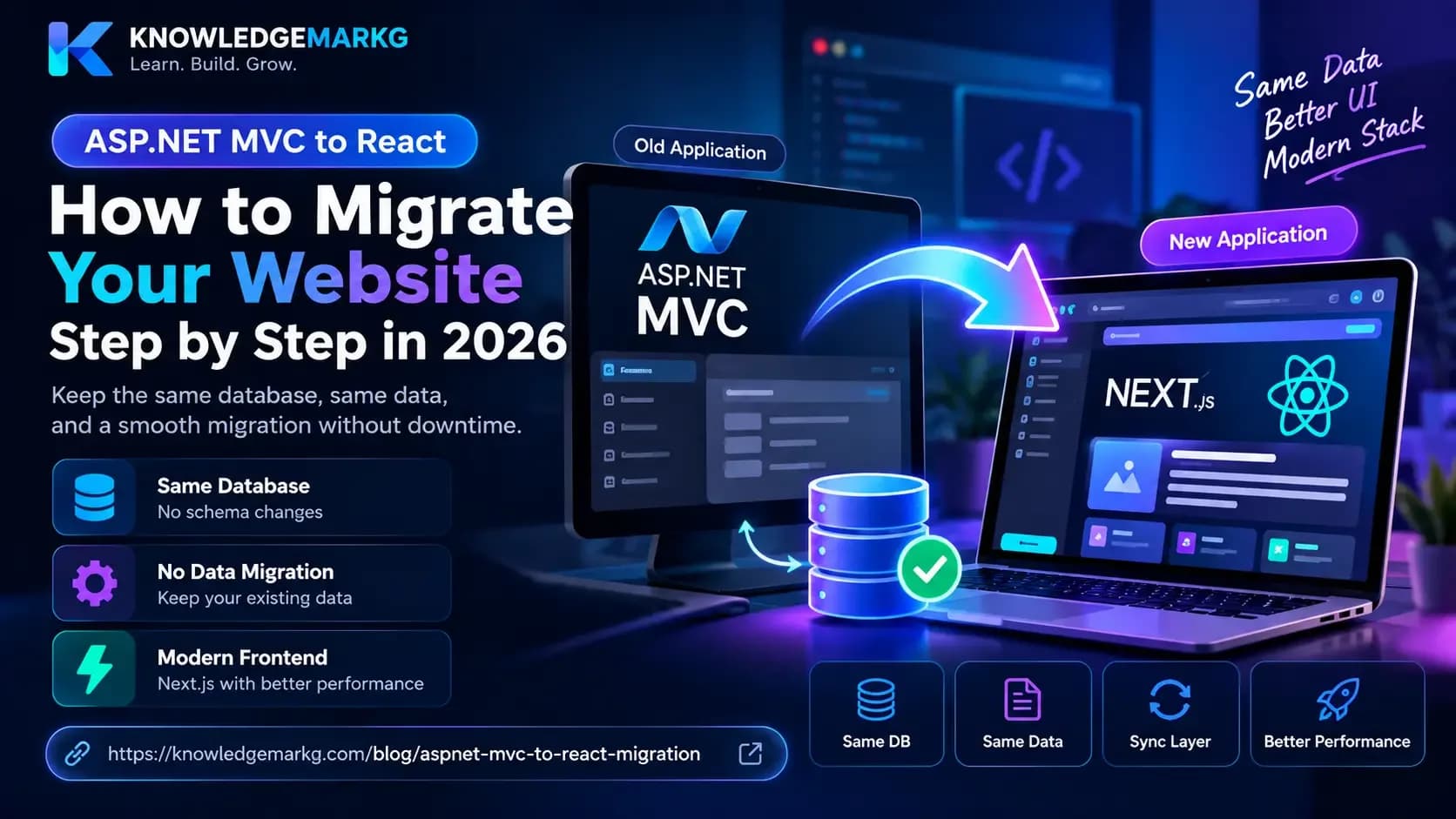
Move an ASP.NET MVC app to React or Next.js without forking the database or freezing the old site: the shared data layer, the EF migration trap, and the IIS deploy that silently does nothing.